
If you’re new to pickleball, shopping for your first paddle can feel overwhelming.
Every pickleball paddle review sounds convincing.
Every product page promises “maximum spin” or “elite control.”
Every spec — carbon fiber, fiberglass, 13mm, 16mm — feels technical.
That confusion is exactly how most beginners make their first mistake before they even step on the court.
If you're searching for the best pickleball paddle for beginners, avoid these three common buying mistakes.
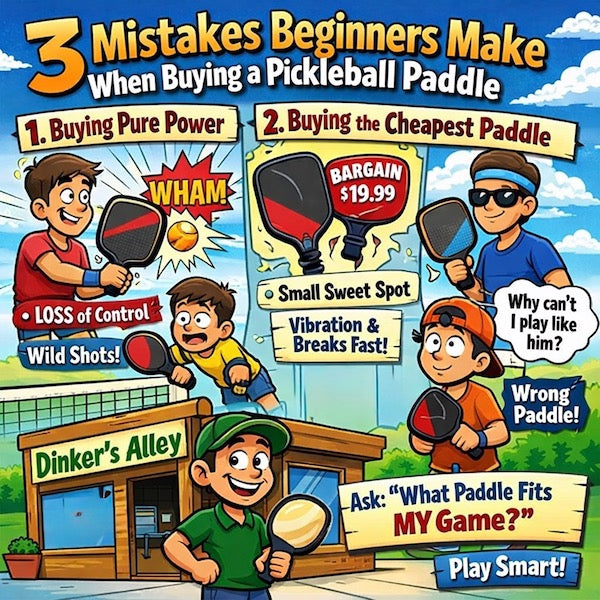
Mistake #1: Choosing a Paddle Based on Pure Power
One of the most common beginner thoughts is:
“If I hit harder, I’ll win more points.”
But in reality, most points in pickleball are lost in the soft game, not on drives.
A super stiff, power-focused paddle may feel impressive at first. Your shots fly fast. The pop feels strong.
But at the kitchen line, control becomes unpredictable.
- Dinks sail long
- Volleys pop up
- Resets feel inconsistent
For beginners, a control-oriented pickleball paddle with a forgiving sweet spot helps you develop consistency and reduce unforced errors.
At every level of the game — from 3.0 to advanced play — control wins more matches than raw power.
Buyer tip: Look for paddles described as “balanced” or “control-focused” rather than “maximum power” if you’re just starting out.
Mistake #2: Buying the Cheapest Pickleball Paddle You Can Find
Yes, you can find pickleball paddles under $50.
But here’s what often comes with ultra-cheap paddles:
- Smaller sweet spot
- More vibration on contact
- Less forgiveness on mishits
- Faster performance drop-off
- Outgrowing it within months
You don’t need a $300 pro-level paddle as a beginner.
But you also don’t need unnecessary frustration while learning fundamentals.
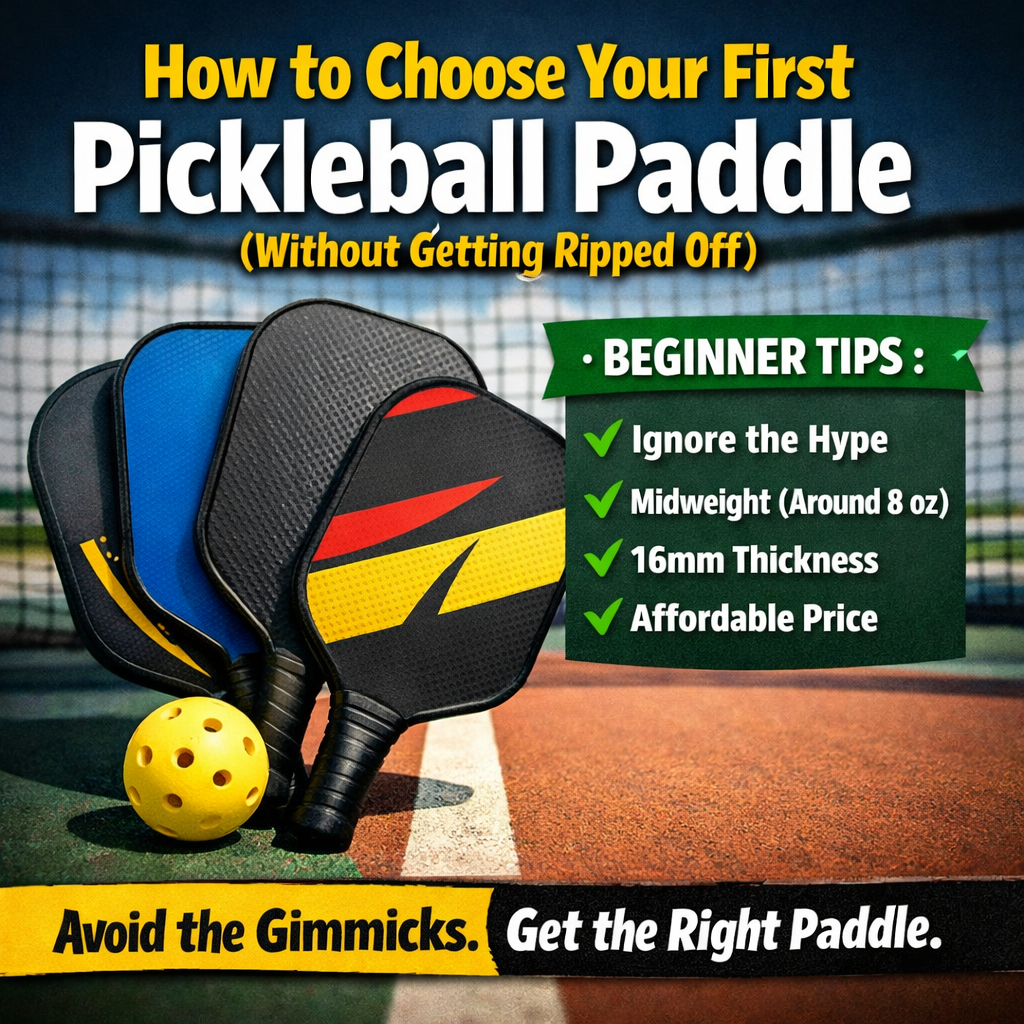
A quality beginner pickleball paddle should:
- Absorb vibration
- Offer a generous sweet spot
- Provide balanced power and control
- Help you build confidence, not compensate for equipment flaws
Investing slightly more upfront often saves money long-term because you won’t feel the need to upgrade immediately.
Mistake #3: Copying the Best Player at Open Play
There’s always one player at your local courts who dominates.
They’re using a specific brand. A specific thickness. Maybe a high-end carbon fiber paddle.
Here’s the truth: they could probably win with almost anything. You can’t.
Advanced players have refined mechanics. Beginners are still developing timing, footwork, and touch.
Your paddle should:
- Improve consistency
- Reduce unforced errors
- Offer forgiveness on mishits
- Support skill development
It shouldn’t be purchased to impress strangers or match someone else’s setup.
The best pickleball paddle for you depends on your current skill level, play style, and goals — not someone else’s highlight reel.
The Smarter Question to Ask Before You Buy
Instead of asking:
“What’s the best pickleball paddle?”
Ask:
“What paddle fits my current game — and where I want to go?”
That shift alone separates thoughtful players from impulsive buyers.
When you choose a paddle based on:
- Your experience level
- Your strengths and weaknesses
- Your style of play
- Your development goals
You’ll progress faster — and enjoy the game more.
Final Thoughts: Choosing the Right Pickleball Paddle as a Beginner
Buying your first pickleball paddle doesn’t have to be confusing.
Avoid chasing:
- Pure power
- The lowest price
- Someone else’s equipment
Instead, focus on balance, forgiveness, and long-term development.
At Dinker’s Alley, the goal isn’t to push hype — it’s to help players make confident, informed decisions that support real growth on the court.
If you’re serious about improving your game, start with the paddle that fits you — not the one that just looks impressive.

Leave a comment
All comments are moderated before being published.
This site is protected by hCaptcha and the hCaptcha Privacy Policy and Terms of Service apply.