
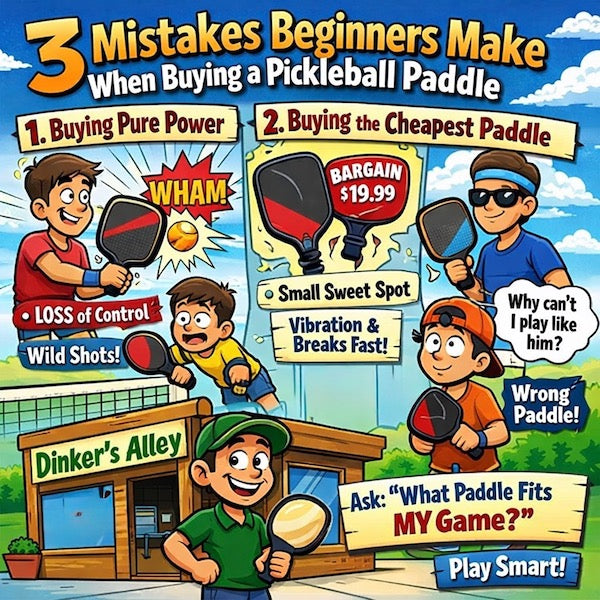
You just started playing pickleball.
You’re hooked.
And now you’re staring at what feels like 200 paddle options wondering:
- Carbon fiber or fiberglass?
- 13mm or 16mm?
- Under $100 or close to $300?
- Am I about to waste money?
Here’s the truth: you don’t need the “best” paddle. You need the right paddle for where you are right now.
Stop Shopping by Hype
Most beginners buy paddles based on what looks cool, what someone at open play recommends, or what a YouTube review ranked #1.
That’s how you overspend—or buy something you outgrow in three months.
The loudest opinions are rarely tailored to your game.
Figure Out Your Real Goal (This Changes Everything)
Ask yourself honestly:
- Are you just playing socially?
- Are you trying to improve quickly?
- Are you already competitive and frustrated?
Most new players fall into the middle: they’re having fun, but they also want to get better fast.
If that’s you, prioritize control, forgiveness, and a paddle you won’t outgrow immediately—not the stiffest, most aggressive power paddle on the market.
The Smart Beginner Paddle Formula
If you want a first paddle that helps you improve (and doesn’t feel like training wheels), look for these traits:
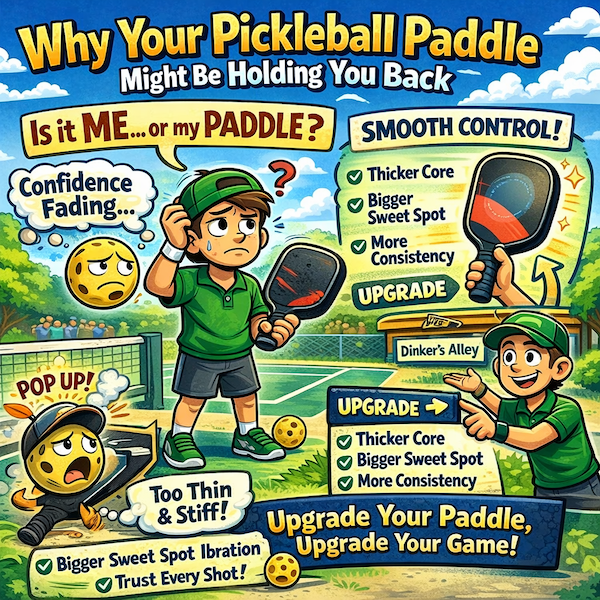
- 16mm thickness for more control and forgiveness
- A larger sweet spot to reduce mishits
- Carbon or composite face for better touch and spin potential
- Mid-range pricing for performance without the hype tax
This combo helps you develop touch, reduce pop-ups, and feel confident at the kitchen line.
13mm vs 16mm: What Beginners Should Know
16mm paddles typically feel softer and more stable. That means:
- More control on dinks and resets
- Less “wild” rebound on off-center hits
- A calmer learning curve while you build consistency
13mm (thinner) paddles often feel poppier and faster, which can be fun—but can also punish beginners who are still dialing in soft touch.
Carbon vs Fiberglass: Keep It Simple
- Carbon / raw carbon style faces: more connected feel, better control, and room to grow as your touch improves.
- Fiberglass faces: usually a little livelier (“pop”), which can feel great… until it starts sending balls long when your swing gets bigger.
As a beginner who wants to improve quickly, carbon or carbon-composite is usually the safer bet.
The Real Beginner Mistake
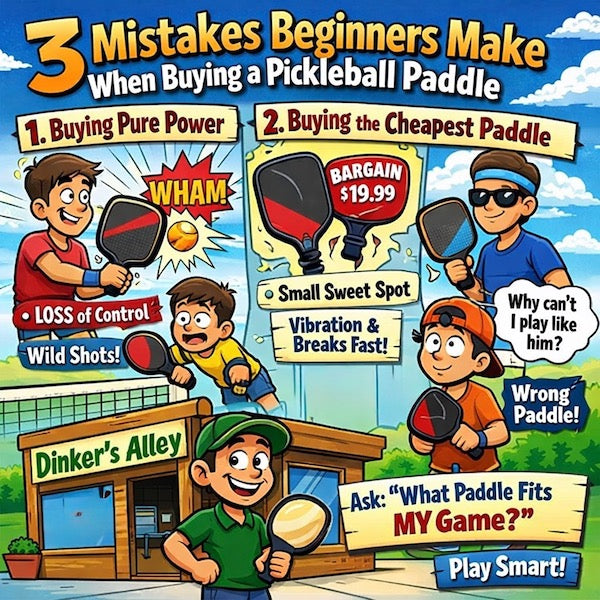
The biggest mistake beginners make isn’t buying cheap.
It’s buying a paddle that doesn’t match their ambition.
If you watch improvement videos at night, get annoyed when you lose, and think about your next upgrade after open play… you’re not casual.
Buy accordingly.
Quick Takeaways
- If you want to improve quickly, start with control + forgiveness.
- 16mm is a strong default choice for most new players.
- A bigger sweet spot beats a “pro power paddle” when you’re learning consistency.
- Mid-range paddles often deliver the best value-to-performance for beginners.
Need a Simple Shortlist?
Dinker’s Alley exists to simplify this decision so you can focus on improving, not second-guessing your next purchase.
Beginner Paddle FAQ
What’s the best pickleball paddle for beginners?
For most beginners, a control-focused paddle with a larger sweet spot and a 16mm core is the safest starting point.
Should beginners use a 16mm paddle?
Often, yes. 16mm tends to offer more forgiveness and control, which helps you improve faster with fewer frustrating mishits.
How much should a beginner spend on a paddle?
Mid-range is usually the sweet spot: enough quality to feel a real upgrade without paying for pro-level hype you don’t need yet.

Leave a comment
All comments are moderated before being published.
This site is protected by hCaptcha and the hCaptcha Privacy Policy and Terms of Service apply.